Your business requires regular cleaning based upon potential hazards, operational volume, food allergen presence, and regulatory checks, plus documented records demonstrating HACCP compliance, inspection results, and government health requirements. The information below detail essential sanitation program components.
Essential Summary
- Food safety cleaning professionals in Brampton cater to restaurants, grocery departments, commissaries, warehouses, bakeries, schools, mobile vendors, and allergen-sensitive operations.
- Frequently contacted areas, food-contact equipment, kitchens, floors, drains, restrooms, and storage areas are disinfected using area-specific procedures to avoid cross-contamination.
- Approved sanitizer dilution, suitability, and contact time are verified by trained specialists, with completion documented via checks, reviews, and action records.
- Danger, throughput, changeovers, spills, and standards must shape maintenance schedules, with everyday, recurring, and periodic tasks assigned by location.
- Focus on contractors exhibiting hazard analysis knowledge, public-health knowledge, WHMIS education, liability, testimonials, color-categorized equipment, and compliance-ready cleaning paperwork.
Brampton Operations That Need Food Safety Cleaning: Which Ones?
Brampton facilities that handle, store, prepare, package, or serve food require food safety cleaning. Implement it if your facility is covered by health department oversight, food standards, or HACCP systems. The rule covers food venues, break rooms, supply centers, retail departments, butcheries, seafood areas, stores, and facility food prep.
Compliant food safety cleaning is equally necessary in warehouses, food manufacturing plants, cold storage sites, retail bakeries, school nutrition programs, banquet helpful information halls, and meal delivery hubs. Mobile and temporary establishments matter too, examples including catering trucks, festival vendors, and pop-up food booths. Your venue requires established hygiene procedures when your staff handle raw materials, divide prepared foods, warm meals, or maintain allergen storage. In Brampton, sanitation is not discretionary; it represents lawful, operational, and customer protection adherence.
Which Areas Do Brampton Cleaning Experts Cover?
Professional cleaning services specializing in Brampton disinfect high-contact surfaces, kitchen facilities, floors, and restrooms in compliance with food safety regulations. Focus on these locations occurs because they pose maximum contamination danger, potential for accidents, and possible regulatory violations.
Knowing their service areas allows you to confirm your operation's sanitation satisfies required standards and regulations.
High-Touch Surface Disinfection
assign how regularly each area is cleaned
in cases where outcomes fall above specified thresholds. Furthermore, they avoid secondary contamination via changing wipes, following unidirectional procedures
Food Prep Areas, Flooring, and Sanitary Facilities
Professional cleaners in Brampton concentrate on kitchens, floors, and restrooms given that each location involves distinct food safety, slip-and-fall, and health code requirements. In industrial kitchens, you need grease removal from cooking stations, appliance surfaces, drain systems, preparation areas, and backsplashes to minimize contamination and pest pressure.
Professional floor care with documentation is also included. is also provided as part of the service.
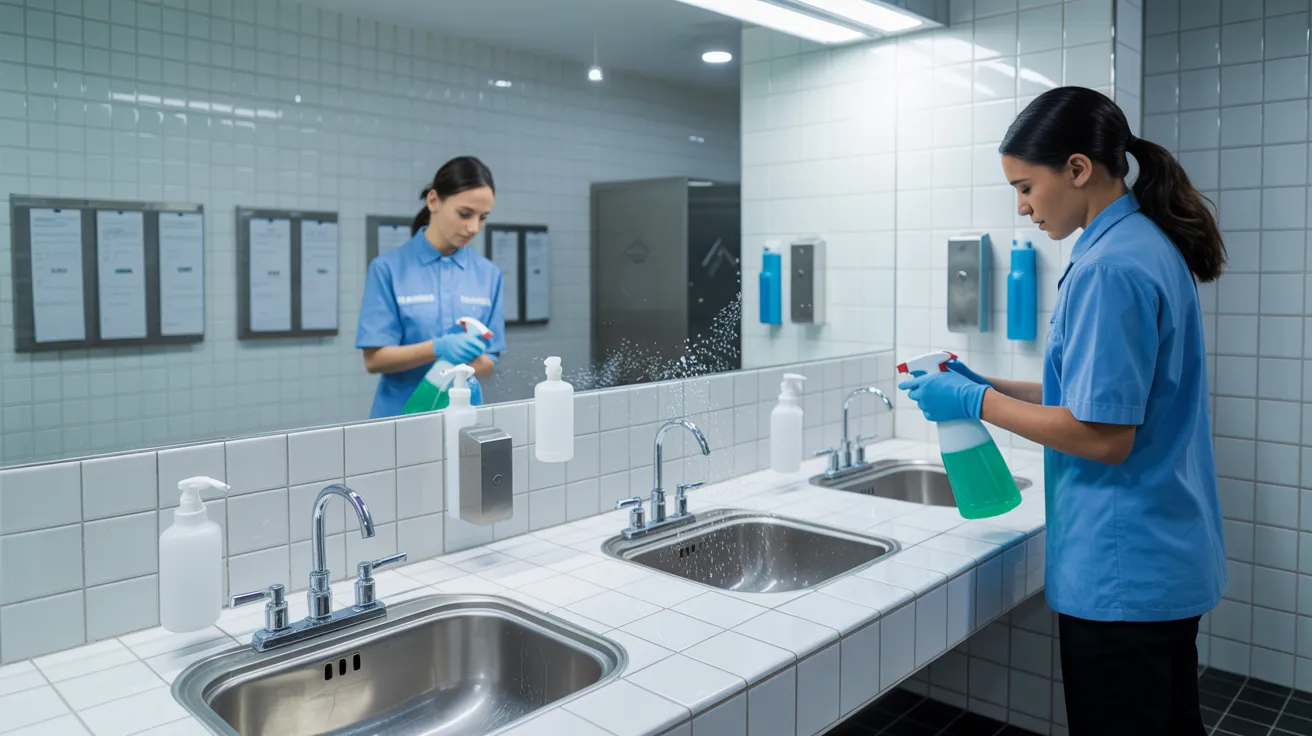
In restrooms, cleaners disinfect contact surfaces, bathroom hardware, partition walls, accessory dispensers, and receptacles then restock supplies and control odours. They also service restaurant moprooms, where chemical storage, sink hygiene, and drainage conditions can affect sanitation compliance and staff safety daily.
Food Safety Cleaning Significance for Brampton Businesses
Brampton businesses need to implement proper sanitation practices for meeting health code requirements and passing inspections. You also reduce cross-contamination by cleaning and sanitizing food-contact surfaces, equipment, and high-touch areas correctly. Most importantly, you safeguard public health by lowering the risk of foodborne illness in your facility.
Health Code Compliance
Because Brampton food companies operate under mandatory safety protocols, food safety cleaning directly determines your competence to adhere to health code requirements, protect customers, and eliminate enforcement action. You must maintain hygienic food handling zones, written maintenance records, appropriate product handling, and auditable operational standards that meet municipal and provincial inspection expectations.
Thorough sanitation enables cross-contamination prevention by minimizing residue on common tools and commonly contacted zones.
Cross-Contamination Prevention
Adhering to health code standards requires your skill in preventing cross-contamination throughout daily food handling and cleaning. You need to isolate uncooked items from finished products, clean prep surfaces between tasks, and store cleaning supplies separately from food. Organized systems minimize contamination events and ensure consistent compliance during inspections.
Implementing allergen separation helps ensure major allergens don't touch shared surfaces, containers, or equipment. Deploy dedicated cutting boards, color-coded tools, and clear tool marking so staff don't mix items while preparing or distributing. Require handwashing after handling raw meat, seafood, eggs, or allergen-containing products. Replace wiping cloths regularly, and verify sanitizer strength with test strips. When your team learns these guidelines every shift, you establish a more hygienic, safer workplace that meets Brampton's food safety expectations regularly.
Public Health Safeguarding
Should cleaning standards break, you don't simply encounter inspection problems—you increase the potential of contamination-related sickness harming customers, staff, and the wider Brampton community. You also undermine your responsibility in safeguarding community wellness, especially in high-traffic food premises where pathogens travel quickly through surfaces, equipment, and touchpoints.
You require cleaning protocols that remove contaminants, sanitize effectively, and validate outcomes. This involves maintaining contact periods, using authorized sanitizers, documenting procedures, and coaching employees to meet health-unit expectations. These controls promote illness spread by minimizing pathogens before reaching surfaces or food. Throughout Brampton, strong cleaning protects vulnerable communities, minimizes disease potential, and proves your diligence. When you adhere to standards, you exceed regulations—you mitigate risk and facilitate secure food handling region-wide.
Why Is Cleaning Essential for Food Safety Compliance?
Establishing comprehensive cleaning schedules backs food safety compliance by minimizing contamination hazards, controlling pathogen growth, and keeping your facility aligned with sanitation requirements under HACCP-based programs and public health regulations. You verify that product-contact areas are visibly clean and microbiologically controlled, facilitating documented preventive controls and inspection readiness.
Systematic cleaning further solidifies allergen control by clearing residues that can lead to undeclared allergen exposure. When you pair validated sanitation procedures with safety training, your staff can implement consistent approaches, handle approved chemicals appropriately, update records accurately, and handle deviations before escalation occurs. Systematic cleaning enables traceability, verifies remedial measures, and proves accountability in audits. Furthermore, it aids you preserve product safety, maintain operational compliance, and lower the possibility of regulatory actions, market recalls, grievances, and preventable health dangers.
What's the Ideal Time to Arrange Commercial Cleaning?
food contact surfaces, bathrooms, and high-touch areas
risk levels, production capacity, or regulatory standards are updated
Finding Quality Brampton Cleaning Experts: A Guide
Screen providers initially by their food hygiene standards—not budget alone. You need to confirm that every company meets CFIA, public health, and HACCP standards for your operation. Demand insurance verification, WHMIS compliance, training records, and management systems. Evaluate technician understanding of cross-contamination risks, chemical safety, and documented sanitation practices.
You should also assess operational reliability and responsibility. Request references from Brampton food businesses, then examine response times, corrective actions, and communication standards. Confirm the company participates in supplier audits and can present audit-ready records when regulators or third parties request evidence. Check whether equipment is maintained is performed, colour-coded tools are used appropriately, and site-specific hazards are recognized. A competent service protects compliance, product integrity, and your brand reputation.
What aspects should a Food Safety Cleaning Plan include?
Put together a written program that establishes every sanitation duty, standard, and accountability before production begins. You should list cleaning intervals, permitted substances, dilution percentages, exposure times, instruments, and inspection methods for each zone, surface, and piece of equipment. Make sure to include pre-operational inspections, corrective actions, and employee training requirements.
Your strategy should also address contamination prevention controls, waste handling procedures, pest management measures, and written schedules for rest areas, drains, flooring, and food-contact surfaces. Describe how you'll separate raw and ready-to-eat processes, support ingredient tracking, and maintain accurate allergen labeling through validated cleaning between product changes. You should assign accountability, maintain signed records, and review results against regulatory standards, HACCP controls, and customer requirements. When gaps appear, update procedures immediately and retrain staff.
Regular Posed Inquiries
Can sanitation providers accommodate overnight shifts in Brampton facilities?
Yes, you can set up cleaning services to handle overnight shifts in Brampton facilities. You'll manage overnight sanitation around production schedules, access requirements, and personnel requirements. Providers generally establish nightshift logistics to minimize interruption, maintain standards, and document finished tasks. You should confirm timeframes, management, access procedures, and disposal methods before service starts.
Do sanitation professionals provide emergency spill response solutions?
Yes, you can locate several Brampton sanitation experts offering spill containment services. They handle contamination, evaluate risks, contain affected areas, and perform swift decontamination to minimize risk and limit operational impact. You should verify response times, certifications, protocols, and procedures. If your facility must meet standards, choose a service that documents incidents, follows procedures, and supports audits.
Do eco-friendly disinfectants function safely on surfaces contacting food?
Definitely, eco-friendly disinfectants work safely on surfaces contacting food if you select items marked food-safe that adhere to regulatory requirements. You need to verify application timing, dilution ratios, and rinse requirements prior to application. Plant based formulas minimize harsh chemical exposure, but you must have confirmation of performance against specific pathogens. To keep surfaces residue-free, adhere to precise manufacturer instructions and validate your disinfecting agent satisfies food sanitation requirements.
Can cleaning plans adjust with production fluctuations?
Certainly, cleaning plans respond to seasonal variations readily. Modify frequencies, staff levels, chemicals, and confirmation procedures to fit with production rhythms while preserving regulatory compliance. Minimize production interruptions via planning cleaning amid line changes, high demand periods, and usage patterns. Also revise SSOPs, staff education, and environmental testing to capture transient threats, novel allergens, or increased soil loads. Periodic assessments preserve the schedule effective.
Do commercial cleaners train employees on sanitation best practices?
Absolutely, professional cleaning companies regularly deliver staff training on hygiene standards. Your staff receives training on proper chemical use, contact times, contamination avoidance, machine takedown, and paperwork. They typically align instruction with HACCP, GMP, and CFIA or local public health standards. Many conduct sanitation audits to ensure adherence, pinpoint weaknesses, and strengthen corrective measures. This enables you to sustain uniform standards, pass inspections, and lower contamination dangers consistently.
Final Thoughts
Partnering with Brampton commercial cleaning and food safety professionals goes beyond tidying—it guarantees your operation stays inspection-compliant and your protocols remain compliant. From kitchen areas to production zones, each cleaned area and maintained corner lessens contamination risk and avoids costly disruptions. By scheduling maintenance on appropriate schedules and executing a comprehensive cleaning strategy, you protect staff, your customers, and your image. In a heavily regulated sector, clean environments can't be overlooked—they're critical to business success.
Comments on “Food Safety Solutions Brampton”